
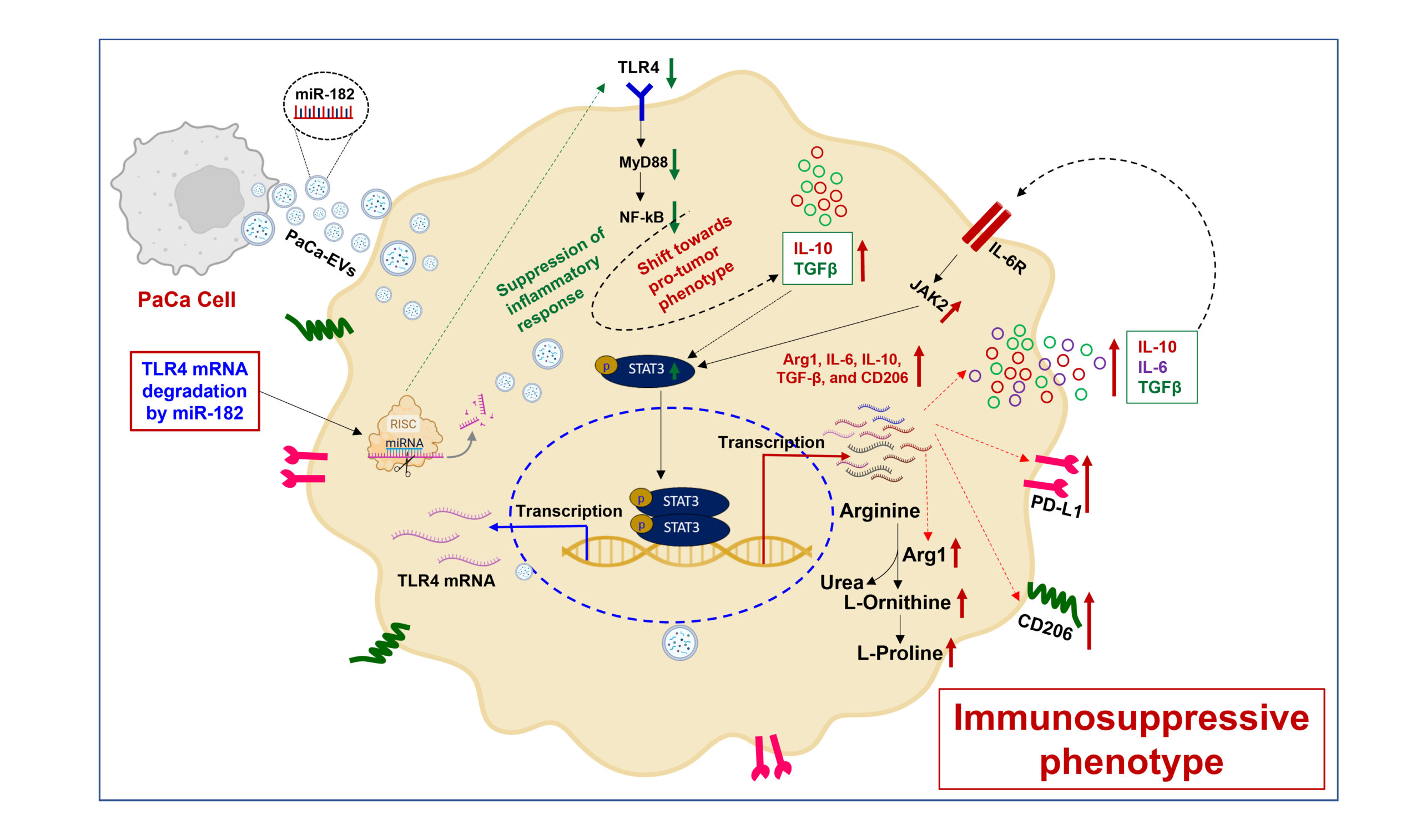
Scientific Challenge: Pancreatic cancer creates an immunosuppressive tumor microenvironment that limits effective immune responses and therapeutic success. The mechanisms by which tumor-derived extracellular vesicles (EVs) influence immune cell behavior remained poorly understood.
Study Type: Translational Cancer Research | Extracellular Vesicles | Multi-omics | Immunology
Our Contribution: Nelson Scientific Labs investigated how pancreatic cancer-derived extracellular vesicles regulate macrophage plasticity through microRNA signaling. We analyzed multi-omics data for characterization of immune cell responses, and evaluation of targeted inhibition of miR-182-5p in preclinical pancreatic cancer models.
Key Findings: Tumor-derived EVs carrying miR-182-5p promoted immunosuppressive M2-like macrophage polarization, increased PD-L1 expression, and suppressed CD8+ T-cell activity. Targeted inhibition of miR-182-5p restored anti-tumor immune responses, reduced tumor growth, and significantly improved survival in pancreatic tumor models.
Research Impact: This study identifies extracellular vesicle-mediated microRNA signaling as a key driver of immune suppression in pancreatic cancer and demonstrates the therapeutic potential of targeting EV-associated miRNAs to reprogram the tumor microenvironment.
Publication: https://doi.org/10.1038/s41392-025-02559-3