
CardioWatch: An Omics-Based PredictionAssay for Cardiac Late Effects of Acute Radiation
Principal Investigator: John B. Tyburski, Tomas Kanholm
Collaborating PIs: Amrita K. Cheema, Heather Himburg, Marjan Boerma
Award Type: Contract
Funding Organization: NIH/NIAID
Phase | Lead Investigator | NSL’s Contribution | Focus |
|---|---|---|---|
Phase I | John B. Tyburski | Biomarker discovery, feature selection, and AI model development in a mouse model | Biomarker Discovery |
Phase II | Tomas Kanholm | Biomarker discovery, AI model refinement, and validation in rat and NHP models | CardioWatch Development and Validation |
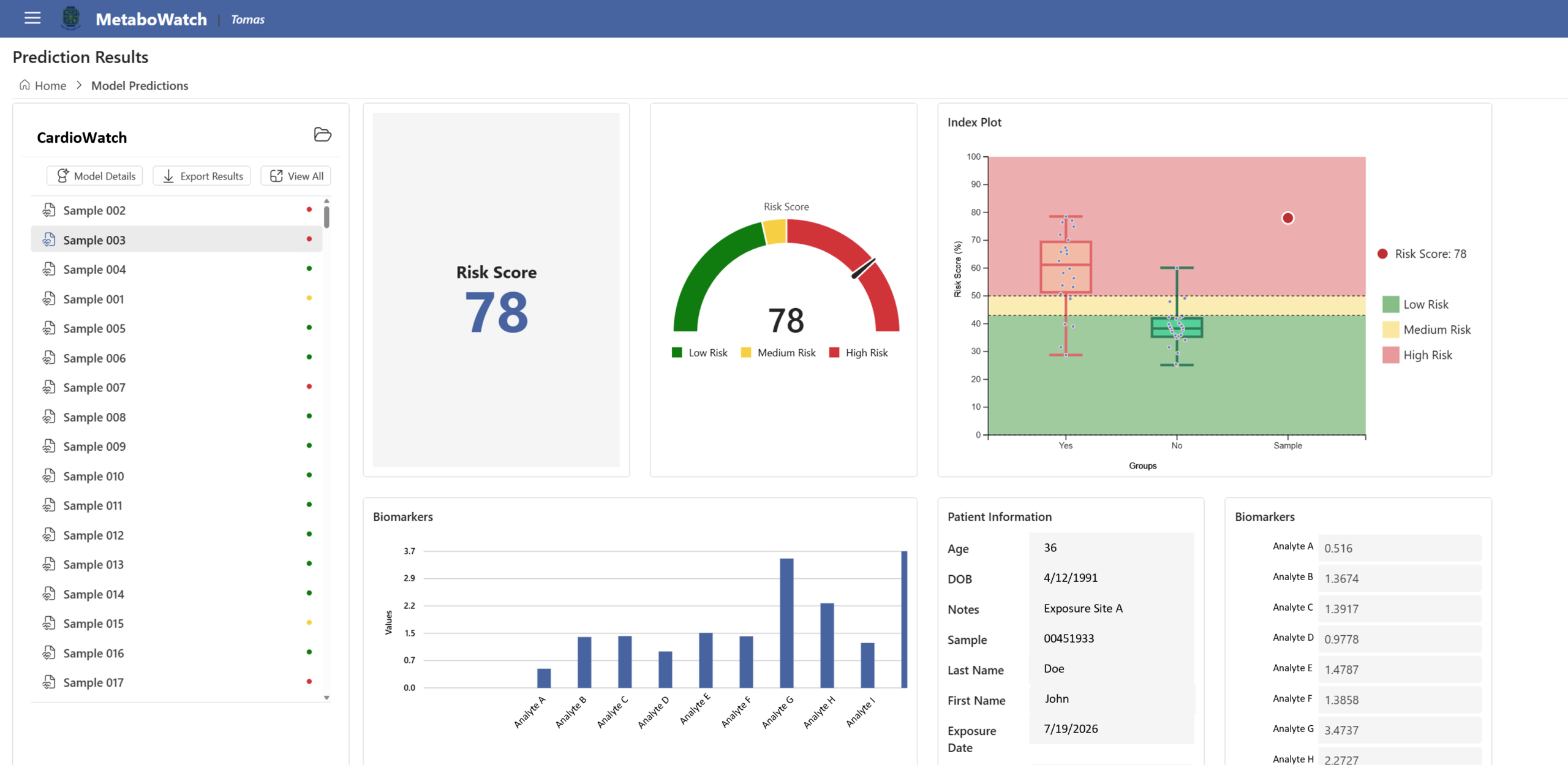
Radiation-induced cardiovascular disease is a serious delayed effect of ionizing radiation exposure, yet no clinical tool currently exists to identify individuals at elevated risk before symptoms develop. This project is developing CardioWatch, a blood-based, multi-omics diagnostic assay, and MetaboWatch, a machine learning risk prediction platform, to enable early identification of radiation-induced cardiac injury and improve medical management following radiological or nuclear incidents.
Phase I efforts focused on discovering and evaluating metabolomic biomarkers associated with delayed effects of acute radiation exposure. The project established a foundation for identifying individuals at risk for late radiation-induced organ injury, particularly cardiovascular disease, and generated the biomarker data necessary to support development of a predictive diagnostic assay. Building on the Phase I discoveries, Phase II project is focused on refining and analytically validating CardioWatch, a multi-analyte, multi-omics blood test that combines metabolites, lipids, and proteins to predict radiation-induced cardiovascular disease using rodent and non-human primate model systems. The project also includes MetaboWatch, a machine learning platform that integrates biomarker data for individualized risk prediction. Current efforts focus on analytical validation, reproducibility, and assay performance across laboratory settings, with the long-term goal of supporting FDA clearance as a first-in-class in vitro diagnostic for radiation-induced cardiovascular risk. Biomarkers are being evaluated across multiple preclinical models and in a human cohort of esophageal cancer patients receiving thoracic radiation therapy.
Outcomes NIH/NIAID SBIR Phase I & II (2020–Present):
- Established foundational biomarker datasets supporting development of the CardioWatch platform.
- Developed MetaboWatch, a machine learning software platform for predictive biomarker modeling using integrated multi-omics data (completed in 2025).
- Submitted an initial FDA Q-Submission in 2025 to establish the regulatory pathway and validation strategy for CardioWatch.
- Published research supporting the development and validation of the CardioWatch platform. [currently ongoing]
- Characterized urinary metabolic profiles in irradiated rodent models treated with Activated Protein C (APC), a potential radiation mitigator.
- Presented research findings at six scientific conferences through poster presentations; ; one oral presentation.
MERIE: Mitigator Efficacies after Realistic IND Exposure
Principal Investigator: David Brenner
Collaborating PIs: Sally Amundson; Marjan Boerma; Amrita K Cheema; Heather Himburg; Guy Garty; and Igor Shuryak
Award Type: Research Grant
Funding Organization: NIH/NIAID
Sub-Project | Lead Investigator | NSL’s Contribution | Focus |
|---|---|---|---|
Project 1 | Sally Amundson | Biomarker discovery of GI dysfunction and response to MIST | Gastrointestinal Injury |
Project 2 | Heather Himburg | Stratification of individuals for mitigator administration and response monitoring | Lung and Kidney Injury |
Project 3 | Marjan Boerma | Stratification of individuals for mitigator administration and response monitoring | Cardiovascular Injury |
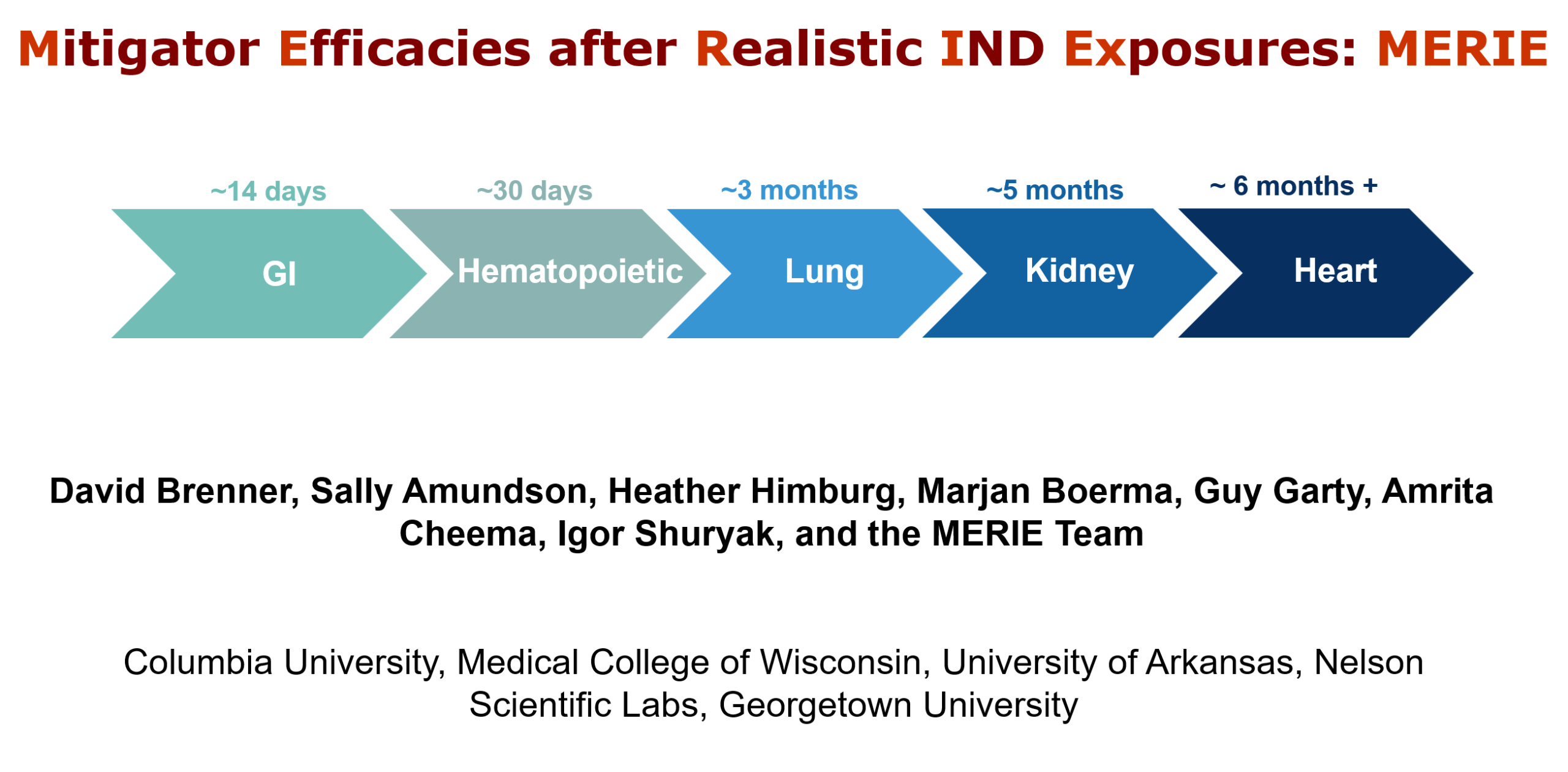
MERIE is a multi-project research program studying organ injury from radiation exposures relevant to improvised nuclear devices (IND), including IND-neutron and ultra-high dose rate (UHDR) radiation, for which no large-scale multi-omics investigation has previously been conducted. The program comprises three projects, each focused on a different organ system and mitigator: Project 1 evaluates MIIST305 for gastrointestinal (GI) injury, Project 2 evaluates lisinopril for lung injury, and Project 3 evaluates simvastatin for cardiovascular injury. NSL leads the computational and bioinformatics arm of the shared MERIE Biomarker Core, working alongside the Mass Spectrometry and Analytical Pharmacology Shared Resource (MSAP-SR) at Georgetown University to support all three MERIE research projects. The Core provides a unified pipeline for multi-omics data acquisition, analysis, and predictive modeling—turning proteomic, metabolomic, and lipidomic data from irradiated rodent models into biomarker panels that can flag organ injury early and guide mitigator selection.
NSL’s contribution centers on the computational side of this pipeline: FDA-compliant predictive modeling, integrative network analysis, and deep learning methods for identifying and validating radiation injury biomarkers. This includes maintaining and refining existing panels, such as the CardioWatch panel for cardiac fibrosis and the lung injury panel, as well as supporting discovery efforts to identify new biomarkers of GI, lung, and cardiovascular damage and their response to mitigator treatment.
Current Activities
- Verifying and refining the CardioWatch and lung injury biomarker panels in rats exposed to IND-neutron and UHDR radiation
- Developing and applying machine learning and deep learning models (including hierarchical integrative models and network-based differential analysis) to identify novel multi-omics biomarker signatures
- Supporting MRM-MS based quantitation efforts (e.g., Citrulline and Procalcitonin for GI injury) with downstream data processing and biomarker validation
- Hosting and managing multi-omics data through NSL’s Virtual Research Environment, enabling shared analysis, visualization, and reporting across all three projects
- Advancing biomarker panels toward FDA qualification in coordination with regulatory experts
ShinyLink: Our De-Duplication Software
Principal Investigator: John B. Tyburski
Collaborating PIs: Amrita K. Cheema
Award Type: Contract
Funding Organization: CDC
Project Website: ShinyLink.org
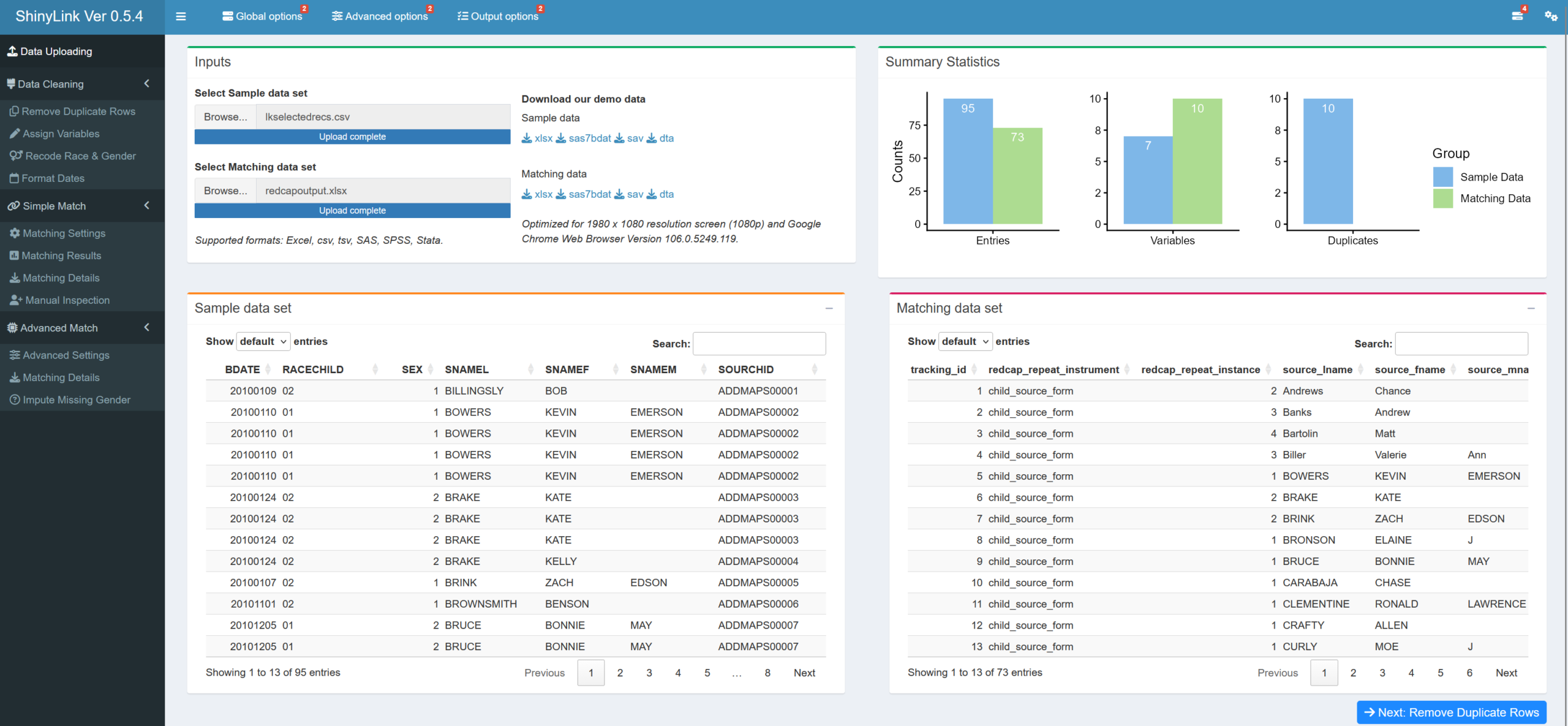
ShinyLink is an open-source, no-cost web application designed to simplify record linkage and data de-duplication for public health surveillance. Many public health programs rely on integrating data from multiple sources, such as medical, educational, and community systems, to ensure that each individual is represented by a single, accurate record. ShinyLink makes this process more accessible by providing an intuitive graphical user interface that guides users through the record linkage workflow without requiring advanced programming expertise.
Developed through a completed grant, ShinyLink bridges the gap between powerful open-source record linkage algorithms and user-friendly software. By eliminating cost barriers and reducing dependence on proprietary platforms, the application supports sustainable, interoperable, and secure data management while expanding access to high-quality record linkage tools for public health practitioners and researchers.
Key Features
- Open-source record linkage platform
- Data de-duplication workflows
- Graphical user interface
- Cross-dataset matching
- Cost-free deployment
- Supports interoperable public health data management
Tarka: Our Solution to AI-Based Modeling for Biomarker Discovery
Project Leads: Pradeep Thapliya, Jessica Paredes, Tomas Kanholm
Award Type: Contract
Funding Organization: NSL
Project Website: TarkaLab.com
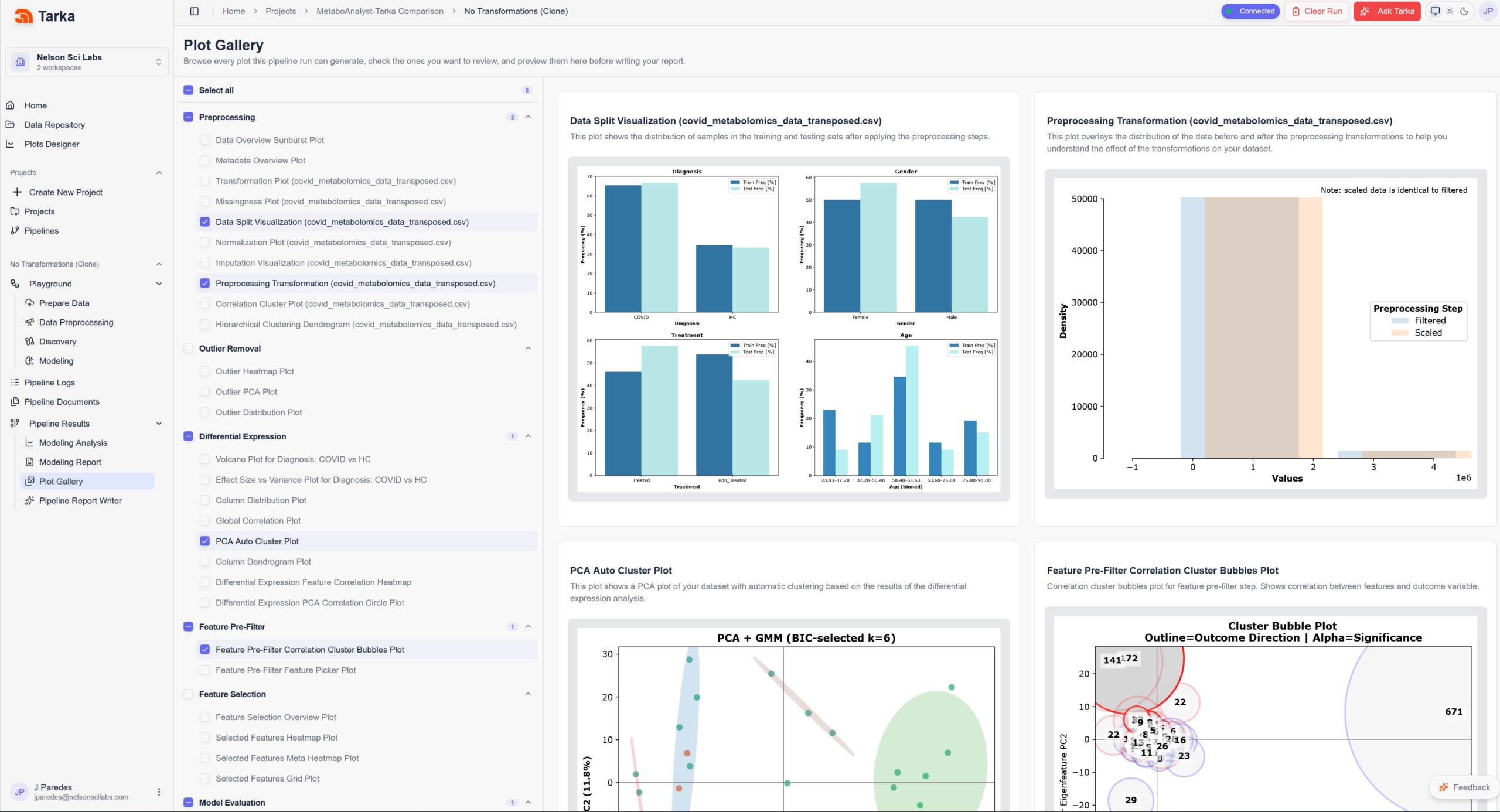
Tarka is a next-generation biomarker discovery and predictive modeling platform designed to simplify the analysis of complex multi-omics data. Supporting metabolomics, lipidomics, proteomics, transcriptomics, and other high-dimensional datasets, Tarka provides an intuitive end-to-end workflow that guides researchers from data preprocessing and feature selection through machine learning, model evaluation, and interactive visualization. By combining scientifically rigorous analytical methods with an easy-to-use interface, Tarka enables researchers to accelerate biomarker discovery while maintaining transparency, reproducibility, and confidence in their results.
The platform also includes an integrated AI research assistant to help users navigate analyses, interpret findings, and streamline report generation for collaboration, publication, and regulatory documentation. Currently in closed beta, Tarka is being refined through feedback from early users and is being developed to support researchers in translating complex multi-omics data into meaningful scientific discoveries.
Key Features
- End-to-end multi-omics analysis workflow
- Data preprocessing and quality control
- Feature selection and biomarker discovery
- Machine learning model development
- AI research assistant
- Automated report generation
- Interactive visualizations
- Publication-ready figures
Ready to Advance Your Research?
Whether you’re investigating disease mechanisms, discovering biomarkers, integrating multi-omics datasets, or developing translational research programs, partner with Nelson Scientific Labs for end-to-end scientific support — from study design through data analysis, reporting, research dissemination, and grant submissions.